
It was a frosty December morning. I sat next to my dad in the passenger seat of our (vintage) Austin Mini and watched as he turned the ignition key. In the winter months, this part of the school run was always a moment of jeopardy, with our little car often adversely affected by the cold. This morning, as was often the case, the starter motor hacked away but the engine failed to start.
Any small-talk was now out of the question. I could feel my dad’s focus and expertise as he waited a couple of seconds then tried again. Still nothing. It was time to take special measures. He reached for a knob on the dashboard named ‘choke’, and pulled it outwards (I now know that this restricted the airflow to the carburettor, creating a richer fuel/oxygen mix). This time, the engine thrummed into life, all sense of jeopardy receding as Dad gunned the engine to warm it up, before gradually releasing the clutch, and we crawled out of the drive.
I’m not a driver myself, but I hear that cars are much better made nowadays. Engines are made to higher specifications, and they start as reliably as the clicking of a light switch. No motorist would choose to go back to the frustrations of the 1970s. But what I have just described is a fond memory; a meaningful moment from a time when the human-machine interface was a visceral matter, requiring some effort and nouse.
At the weekends, I would often see my dad elbow-deep in the mini’s engine, or on his back underneath it, having driven the front wheels up onto two metal supports. Sometimes, I would wriggle under the chassis myself and look up at an alien underworld of mysterious shapes, crusty with rust, giving off a pungent scent of oil and metal.
The modern experience of car maintenance has no such intrigue or satisfaction. Engines are not designed to be fully accessible, and even trained mechanics may struggle to coax them back into life. When you take your car to a garage, it might take days to find out what is wrong with it. In the end, they often find the fault is buried somewhere in the software and may not be rectifiable.
Another device that played a crucial part in my childhood was a small black and white TV with an arial that you had to manipulate in order to get a clear picture. This ring of wire was ingeniously attached so that it could move in three dimensions to catch the electro-magnetic waves that beamed invisibly and mysteriously into the living room. Once, when the TV repair man was called, I got to see the innards of the set. As he lifted off the casing, I glimpsed the miraculous and slightly scary miracle of the cathode ray tube, as the smell of hot capacitors filled the room.
For most of us these days, the workings of our wafer-thin screens and smart devices are even more mysterious. They may work flawlessly for a couple of years, but if problems arise, they are usually impossible to take apart – even out of curiosity – and any attempt at repair may invalidate your warrantee. iPhone users with fixing skills to do so have had to sue Apple for the right to spare parts. Those of us who are less handy with a screwdriver are left helpless if our device flatlines, and that is just how the manufacturers want us. They have grown rich on a business plan that locks their customers into a dependent relationship where they upgrade every couple of years.
This state of affairs is brand new in human existence. For most of human history, everything you needed was made by you or someone you knew. Makers and menders were important members of the community and highly respected for their skills. Even as societies industrialised and mass-production advanced, most things were still repairable, by their owners or by a skilled professional. Our devices were valued investments that had to be looked after. We bonded with them over many years, sometimes a lifetime.
Under my sink I have a hammer and nails, a hacksaw, a Stanley knife, screwdriver, a plunger. My DIY skills are virtually non-existent compared to my Dad’s, but when I do manage to hang a picture, unblock the sink or sew on a button, the sense of satisfaction comes with a warmth in the belly. It feels healthy and reminds me of something I’d forgotten was missing.
Nowadays, even rewiring a plug is a satisfaction denied by the modern sealed-in design. We are primarily consumers, expected to work our way through an endless succession of goods, replacing them when they break, thereby fuelling the globalised economy. It is all made as affordable and convenient for us as possible – and we humans seem to love convenience above almost anything. But as we have become embedded in this new normal, our sense of agency and resilience has suffered. We are regularly left bewildered by missed deliveries, dodgy service and supply-chain glitches, which we are powerless to correct.
There is a growing feeling that modern society has cut us off from a basic aspect of being human; which is why crafts and re-purposing are enjoying a surge in popularity. Vanishing skills are being valued again in community projects like ‘Mens’ sheds’, where old hands get to use and pass on repair skills. This kind of activity is of particular benefit for older men, whose age and experience are valued in such a setting. But this kind of mindful, attentive activity is something that people of any age can benefit from.
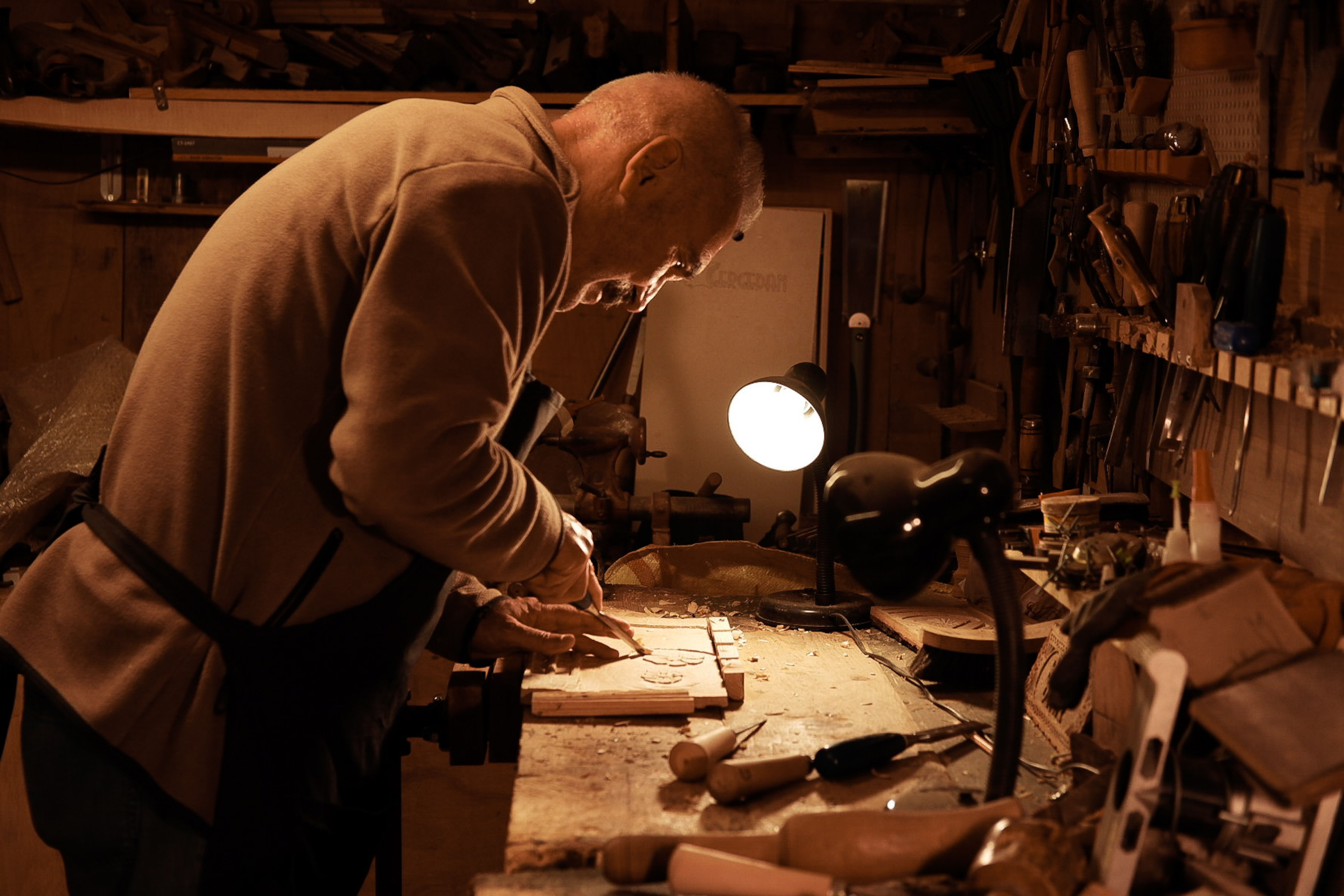
For when we mend something, are we not also mending ourselves, on some level? That freshly darned sock or reanimated printer can be metaphor for recovery or at least provides the comforting outcome of something being put right. Investigating damage over and over again, the mender exercises care, resolves issues and continues to learn.
The ‘right to repair’ movement might be gathering steam, but modern technology is no longer really about individual objects. Rather, it is a nexus of interlinked digital systems that completely surround and penetrate our lives. ‘Smart’ devices from kettles to thermostats promise convenience and speed, but they are merely the visible nodes of a data harvesting infrastructure that runs through our lives, like a parasitic version of the underground mycelial networks that exchange nutrients among forest trees. Where technology used to liberate us, it now facilitates the tightening control of governments and corporations.
We often hear that modern technology may be on the verge of achieving sentience and pursuing its own malevolent aims, a chilling scenario that has been the basis of countless sci-fi stories and films. That may or may not come true. But for me, the machines that gave the strongest impression of being ‘ensouled’ were the grimy technologies of the past. Steam engines and internal combustion engines have circulatory systems. They gasp in oxygen and fart out fumes. They pump and splutter. They are unpredictable and need caring for. Their joints wear out; they leak and wheeze.
I’m not suggesting that the machines of the steam and petrol ages were alive in any real sense, but they were animated by same life force as us. Every animal that has ever lived has done so by breaking down carbon-based molecules in their food, in order to release energy and build their bodies. Over millions of years, the accumulation of unimaginable numbers of dead marine organisms in sedimentary rocks created coal and oil, deposits of pure carbon, which humans eventually discovered could be pretty useful when burned. The energy that powered our steam ships and racing cars was the same energy that moves our own bodies.
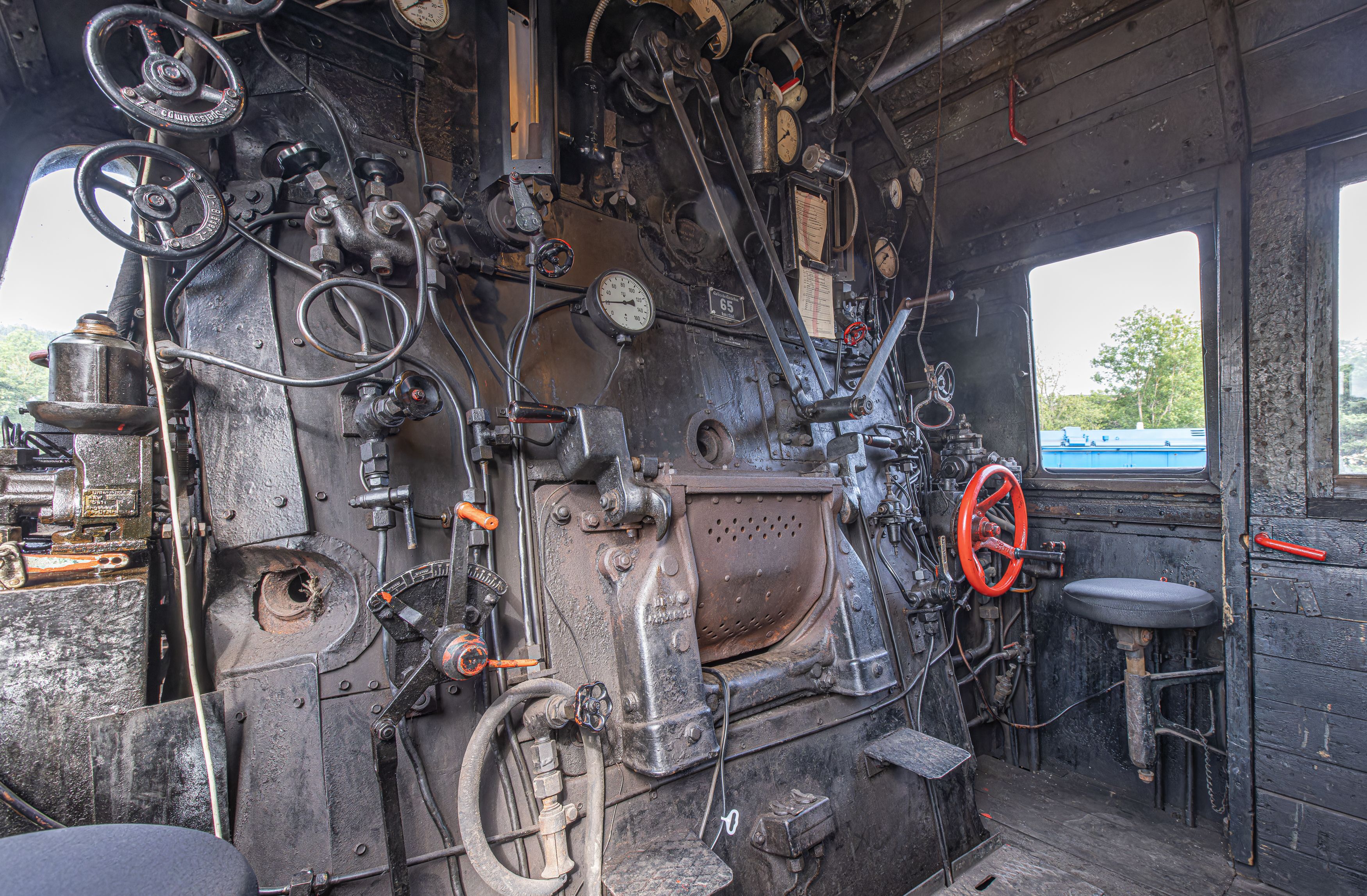
All of this mechanical ingenuity created its own mythology. The vehicles and machines that surrounded us in the 19th and 20th centuries were like Gods and monsters. Steam locomotives had their own names and enjoyed legendary status, inspiring awe and devotion. The Flying Scotsman was a one-off. A character.
The cruel irony that I have been avoiding thus far is that these machines, un-smart but viscerally alive, are the ones that have polluted our planet, and now threaten our very existence and that of the whole biosphere with runaway climate change. The analysis of tree rings from around the world has revealed a sudden uptick in global temperatures from around 1850, coinciding with the height of the Industrial Revolution, and there is now enough CO2 in the atmosphere to keep the temperature rising for centuries whether we change our ways or not.
Scientists and technologists (and their AI) are now racing to apply their ingenuity to tackling the problems that runaway ‘progress’ has created. But without a philosophical shift, they are bound to repeat previous mistakes.
The Industrial Revolution that made the modern world possible was not just a series of practical engineering breakthroughs; it coincided with an intellectual revolution which has come to be known as The Enlightenment (or the Age of Reason). Between the 17th and 18th centuries in Europe, thinkers like Rene Descartes and David Hume were leaders of a new wave of intellectual inquiry and scientific rationalism that sought to take humanity out of the darkness of ignorance and ‘superstition’. With new ideas like the separation of church and state, constitutional democracy and universal human rights, humans would be able to put an end to the constant conflicts that had scarred history and eventually create a Utopian society.

To the rigorously practical men of the Enlightenment, the natural world was simply a machine, which if understood properly could be exploited for the betterment of mankind (whilst filling the pockets of a lucky few). Of course, the idea of Man’s dominion over nature had Biblical roots, but with the dawning of a secular and atheist worldview, the brakes were off. Once God was out of the picture, nothing was sacred, and unlimited exploitation of the natural world could now take place, with the unforeseen consequences we are seeing today.
Current ideas on how to slow climate change include ‘Marine cloud brightening’, a way of artificially creating more cloud cover, thereby reflecting the sun’s heat away from the Earth, while ‘Iron fertilisation’ involves dumping vast quantities of iron-dust into the sea in order to boost algae production which would absorb carbon from the air. Such methods might seem attractive to those wishing to maintain an energy-hungry, consumerist lifestyle, but they are simply a continuation of the mindset that brought about this crisis.
The writer Charles Eisenstein has argued that rather than treating our environment simply as a resource that we need to manage differently, we need to resacralise the natural world and recover a sense of humility and awe. We not nature’s masters, but her children. If this sounds religious, it is. We once had rituals and traditions that constantly reminded us of our connection to nature and its cycles. Utilitarian arguments for change may satisfy our rational minds, but without a deeper dimension – of soul – we will never break from the mythology of material progress that we have worshipped for too long.
Perhaps we need new rituals for a largely urban society, to enshrine sustainable practices and prevent low-impact living from appearing like simply a boring, worthy set of chores.
I now have an opportunity to create my own sacred tradition. My fridge is on the way out. I used to like the noises it made as the gas flowed through the pipes at the back, but what used to sound like whale-song has become a dry wheeze, accompanied by a shuddering vibration. I’m thinking of writing a song in celebration of the fridge’s departing spirit, which I will sing as the guys from council carry it to their van. As I sing, I will be comforted by the certainty that my little Hotpoint will join the collective machine-consciousness and return to me some day in the form of a drinks can, a guitar pick, or part of the pavement I walk on.
I’m joking of course…or am I?


Thanks ,Tom. I enjoyed reading this but did you really post it
Thanks ,Tom. I enjoyed reading this but did you really post it in 2012? prescient if so. And a necessary warning even now. Liz
>
Thanks Liz, been working on it for ages, but not that long! Why did you think it’s from 2012? x
Hello Tom,
I got mixed up and read the date attached to the image of Shakespeare! I did wonder at the amazing talent for prediction…