To many, they are the scapegoats of the age, the visible minority it’s ok to hate. Not gypsies, junkies or chavs but HIPSTERS.


 Here they come with their beards and bobble hats, on rusty racers and skateboards, to take over derelict buildings, open coffee shops and artists’ studios. Uniformly non-conformist, they are the 21st century bohos for whom life is an never-ending gap year, a middle-class bubble of ‘style over content’.
Since their tribe was written about by The New York Times and others around 2000, hipsters have been accused of taking over urban neighbourhoods across the Western world with a vacuous culture of self-conscious ‘otherness’.
Take your typical hipster couple. He is an ‘illustrator’ (he draws like a four-year-old on acid) with a beard you could lose a skateboard in, she flounces about in a native American head-dress and makes teapots out of old crash helmets. Ok, it’s easy to take the piss, but did you spot the deliberate mistake? There is no typical hipster couple.
“Those 18-to-34-year-olds called hipsters have defanged, skinned and consumed the fringe movements of the postwar era—Beat, hippie, punk, even grunge. Hungry for more, and sick with the anxiety of influence, they feed as well from the trough of the uncool, turning white trash chic, and gouging the husks of long-expired subcultures—vaudeville, burlesque, cowboys and pirates.” – Christian Lorentzen*
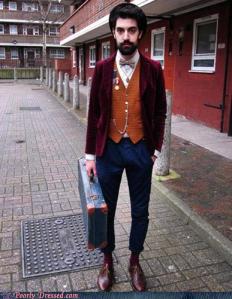
Back in the day, young peoples’ dress codes and tastes would signify an entire philosophy – a pair of DMs or an album by Bob Dylan would speak of a distinct belief system and values, but hipsterism raids the ragbag of twentieth-century style with no concern for meaning. Nothing is sacred; maybe that’s where the hatred comes from.
The irony of this supposedly ubiquitous subculture is that no-one will admit to being one. Call someone a hipster and they will invariably deny it, and likely throw the same accusation back at you – it’s always someone else. But if no-one will endorse the movement, can it really be said to exist?
Some argue that hipster is merely a marketing term created by media, lifestyle and clothing brands. Certainly it’s emergence as a subculture concept seems to have gone hand-in-hand with it’s commodification, as exemplified by the clothing chain American Apparel’s strong identification with hipster style.

Google “I hate hipsters” and over six million pages will flash up in half a second. That’s a whole lot of loathing. But what the hipster-haters will never admit is that hipsterism is just a logical extension of contemporary culture.
Almost everyone is drawn to the past. We like old, weird things found in suitcases at junk shops; we treasure our old childhood toys, we gravitate to old characters and ideas, but these days we reference things so glibly.
As we upload our old photos to flickr, as we share the wise sayings of old authors on facebook without bothering to read their books, we are treating the past as a cultural pick-and-mix of limited nutritional value.
These days, when everything is available at the click of a mouse, we feel the cheapening of culture. When every designer, record producer or video director is looking for sources of ‘authenticity’ to inspire and fuel their product, nothing can remain obscure and special any more. In this post-modern atmosphere hipsters serve as a focus for our anxieties about the debasement of cultural meanings, in which we ourselves are complicit.
By slagging off the hipster we reaffirm our belief in our own sense of taste, depth and authenticity in a world where all three are vanishing faster than the Amazon.
It’s ironic that this much-maligned movement was actually named after an earlier, much more substantial subculture.
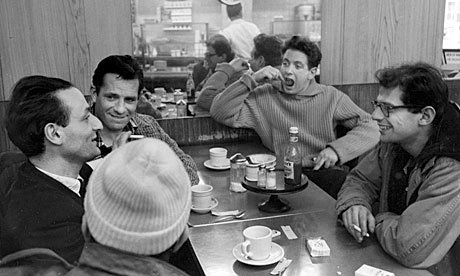
The original hipsters were jazz fans in the American cities of the 40s. Also devotees of avant-garde poetry and drugs, they embraced the jazz musicians’ concept of ‘hipness’ – a semi-mystic sense of collective understanding, with an emphasis on spontaneity, individuality and freedom. The hipster mentality went on to inspire the ‘beat poets’ of the 50’s who took literature in a new direction.
Interestingly, if you look at photos of Kerouac, Ginsberg and the beats, aside from being a little scruffy, there is little in the way of a dress style in evidence. Impoverished poets who rode freight trains across America required little more than hard-wearing, functional clothes. Their true outsider culture stands in marked contrast to the modern tendency for style-over-content; that’s why the original hipsters have proved hard to commodify – what a dissapointment for American Apparel.
http://www.timeout.com/newyork/things-to-do/why-the-hipster-must-die


 Tom George
*I should change oxymoron to paradox, my bad.
Great article! Your last sentence sums it up so perfectly. It has to be media driven (or designer) and not a movement when no one owns up to it and there is no cause. To be a hipster today is an oxymoron really. They are described as a counterculture that doesn’t follow trends yet there is a standard and being a hipster is a trend in and of itself.
Ha, “a beard you could lose a skateboard in.” You’ve just described half the population of Portland. I swear, male babies around here are born with beards–it must be something in the water.